
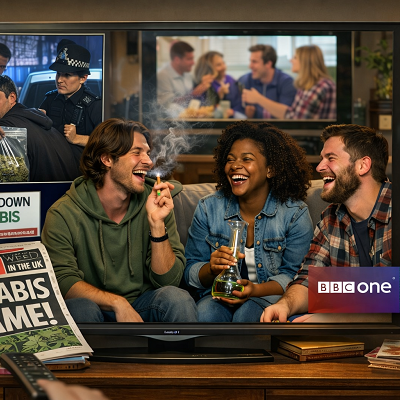

Cannabis on British TV: From 'The Bill' Vilification to Mainstream Comedy
A review of the way cannabis has been represented in British television shows us how changing attitudes towards marijuana are reflected in societal views. In the past, British television served as an amplifier for the anti-cannabis sentiments of successive governments.
However, in 2026 as we continue through this decade, the conversation about cannabis is no longer centered around it being a “threat” or a “menace,” but rather as a common household item used by suburban families.
From the dimly lit interrogation rooms of Sun Hill police station to the bright-lit living rooms of contemporary sitcoms, the representation of marijuana has transitioned from the dark world of crime drama to the light-hearted world of comedy.
The Evolution Of Television Representation
Era | Primary Genre | Narrative Focus |
1980s–90s | Police Procedurals | Crime, “Gateway” drug theories, and moral decay. |
Early 2000s | Gritty Teen Dramas | Rebellion, social alienation, and the “skunk” panic. |
2010s–2020s | Sitcoms & Satire | Normalization, parental use, and mundane humor. |
2026 (Present) | Reality & Wellness | Medical legality, gardening, and “California Sober” lifestyles. |
1. The Vilification of Marijuana: The Dark Ages
‘The Bill,’ Grange Hill
The early days of British television showed us how a single cannabis cigarette would inevitably lead to handcuffs. Shows such as ‘The Bill’ portrayed marijuana as the first step down a slippery slope of illegal activity.
- The Stereotype: The shady weed merchant in a puffa jacket hanging out near the local youth center.
- The Message: That marijuana was merely a tool for villainous characters. Even Channel Four’s version of “Just Say No,” which aired during the series run of ‘Grange Hill,’ reinforced the belief that any kind of substance use would ultimately lead to disaster.
2. Breaking Down Barriers: Channel Four and Rebellion
Channel Four began to break free from traditional portrayals of cannabis in the mid-to-late 90’s and early 2000’s. Shows such as ‘Skins’ and ‘Ideal,’ were among those to challenge this tradition:
- ‘Ideal,’ BBC Three
This groundbreaking program starred Johnny Vegas as a small time pot-dealer who, instead of being depicted as a violent thug, is portrayed as a bored and somewhat endearing slacker with a revolving-door policy of accepting visitors into his home. These people are all eccentric members of his neighborhood. - ‘Peep Show’
Here, marijuana is not a “crime;” it’s a source of embarrassing social anxiety that perfectly captures the middle class British experience of trying to appear “cool” while feeling completely un-cool.
3. Main Stream Acceptance: The New Norm
By 2026, vilification will have virtually disappeared. TV now treats marijuana much like wine — with complete apathy and acceptance.
- The Boomer Consumer: Today, many modern dramas depict seniors or parents using CBD or low THC products for pain relief, transforming the perception of marijuana from a rebellious youth culture icon to a legitimate senior wellness option.
- Stoner Comedy: There has been a surge in “stoner comedies” in which the focus is NOT on the drug itself, but simply serves as a supporting element in a character’s normal evening activities.
- Documentary Trends: While there was once sensationalism surrounding undercover investigations into “Skunk,” today there are high production-value documentaries documenting Britain’s growing medical-marijuana industry and burgeoning green economy.
FAQ: Television’s Growing Pains
- Why did it take so long to change?
Ofcom regulations and the BBC Charter historically required a “moral balance,” often forcing writers to show negative consequences for drug use. - Has the “Skunk” narrative disappeared?
Not entirely. News programs still occasionally use “Skunk” as a buzzword for mental health scares, but fictional TV has largely moved toward a more nuanced “balanced ratio” portrayal. - What is the most iconic “cannabis” show in the UK?
While Ideal is a cult classic, many consider the “Mary Jane” episode of The IT Crowd or the casual use in Brassic as the new standard for British humor.