
From Brixton to Brixton: How London's Jamaican Community Shaped UK Cannabis Culture
The impact of the Windrush generation, and their children and grandchildren, cannot be overstated. They helped establish a cultural identity —and a new way of looking at a “foreign” plant —that would eventually make the smell of CBD vapor in London nothing but a common occurrence today.
Ganja originated in India and made its way to England via the Caribbean, specifically the islands of Jamaica. During the 1800s, many Indians traveled to the Caribbean under an indenture system. These workers carried seeds and the term “ganja,” which originally referred to Indian hemp. Once in the Caribbean, Indian culture mixed with African traditions. What began as a method to relax turned into something much greater than that. Ganga became a medicine for mental health issues. In fact, some people used it as a tea for mental clarity, while others used it as a sacred offering or sacrament in Rastafari ceremonies.
In 1948, when the Empire Windrush arrived at Tilbury in England, Jamaicans brought their roots with them. The people traveling on the ship also brought a deep-rooted connection to cannabis.
Brixton: A center of resistance
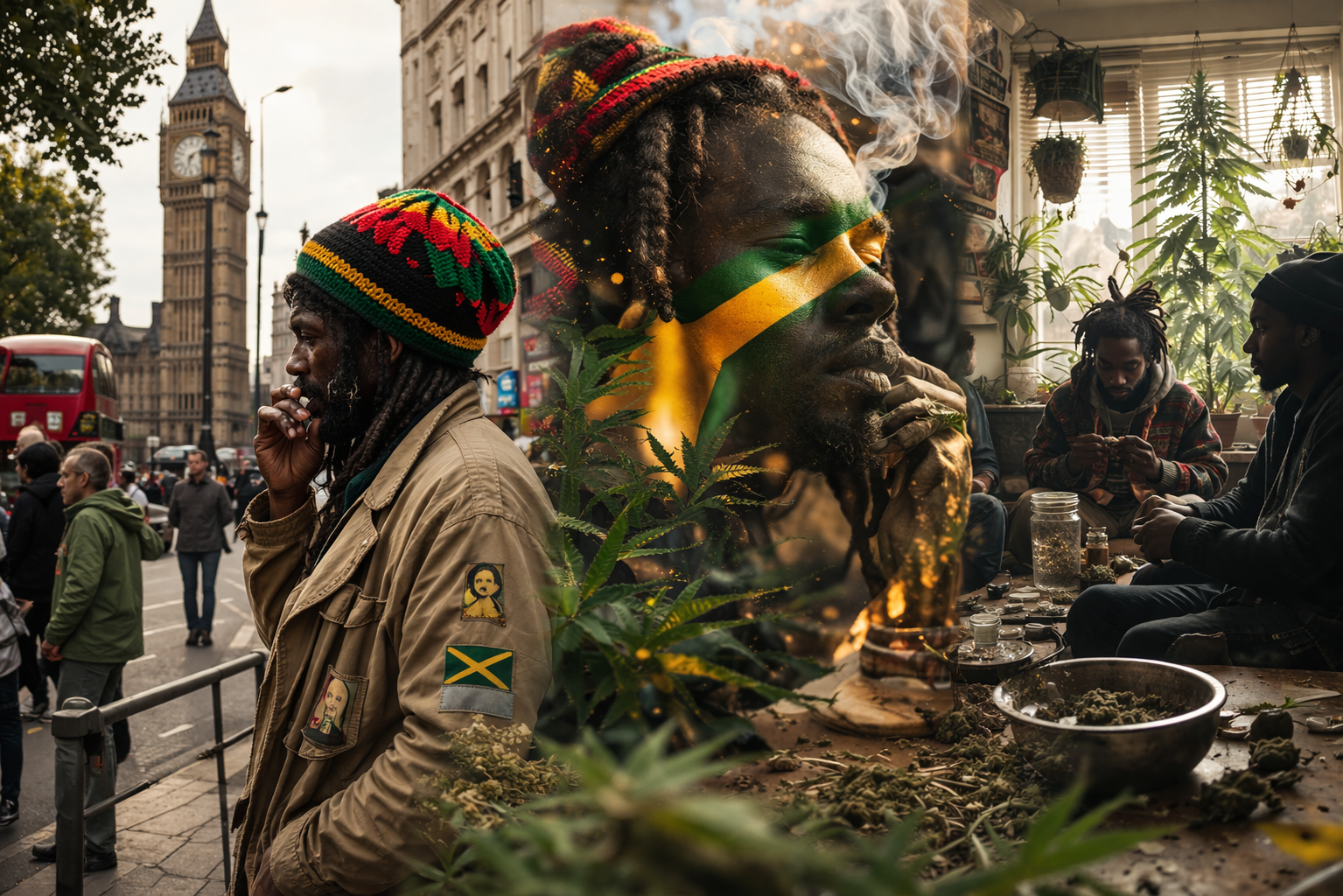
Railton Road in Brixton became known as the Frontline in the 1970s. On this road, a new type of community developed. Music, politics, and social gatherings all revolved around one central idea –the Sound System. These Sound Systems featured large speaker systems that produced such powerful low-end frequencies that you could feel the beat in your chest. In these clubs, known as shebeens (or unlicensed house parties) or in other social gathering areas where cannabis was present, cannabis acted as a social adhesive. At this time, British authorities saw these social gatherings as a threat to public safety. To members of the Jamaican community, however, cannabis represented a form of survival. The lack of employment opportunities and systemic racism created the need for the cannabis culture to thrive.
Conflict and the Sus laws
The history of cannabis use in the United Kingdom is closely tied to the ongoing fight for equal rights for citizens. Between the 1960s and 1980s, British authorities passed several pieces of legislation that granted police authority to randomly stop and search individuals suspected of committing crimes without probable cause.
The results were devastating:
On April 10th 1981, British authorities sparked off riots in Brixton after rioting broke out during an anti-police brutality protest. Rioting continued throughout April with hundreds arrested.
Brixton became a symbol for how prohibition disproportionately targeted minority populations.
An evolutionary shift: From criminal to icon
Jamaica provided England with far more than just a plant. Jamaica provided England with an image of what cannabis could represent. With the influence of Bob Marley and the rise of Reggae music, attitudes toward marijuana changed. Marijuana went from being associated with dangerous backstreet activity to representing peace, spirituality and creativity.
Element of Influence | The Impact on UK Culture |
Music | Reggae and Dub introduced the concept of “meditative listening.” |
Linguistics | Terms like spliff, herb, and chalice entered the everyday English lexicon. |
Social Rituals | The “sharing is caring” etiquette became the standard for consumption. |
The Brixton Experiment (2001)
In 2001, Lambeth Police Commander Brian Paddick launched a pilot project called the “Softly-Softly Approach” in Brixton. He told his officers that if they found someone possessing marijuana, they should confiscate the marijuana and issue a warning rather than arrest them.
Although the Brixton Precedent ultimately contributed to the reclassification of marijuana from class B to class C in 2004, and although this decision was reversed in 2009, it showed that arresting people for minor offenses related to marijuana did not lead to societal collapse.
Legacy Today
Today’s Brixton is a city undergoing gentrification. Hipster coffee houses exist alongside Jamaican grocery stores that have been there since before gentrification. Yet, the legacy of the Frontline remains.
- Medical normalization: Many seniors in the Jamaican community are now legal medical patients and are taking advantage of similar CBD oil products that their parents or grandparents may have been prosecuted for.
- Equity in Social Justice: By 2026, discussions regarding restoration justice will begin to occur. Restoration justice acknowledges that Jamaican communities suffered greatly due to the War on Drugs so that everyone else can enjoy cannabis.
FAQ – Major Cultural Contributions
- Why is Brixton so important? As it was the first major urban settlement for the Windrush generation, it was essentially ground-zero for all Caribbean influences on both law and music in Great Britain.
- What is the Frontline? Historically speaking, it is a reference to Railton Road in Brixton. It is also where riots took place in response to aggressive policing tactics during the 1981 riots and it is still considered one of the most influential locations for underground Reggae culture.
- How did Jamaica influence how Britons consumed cannabis? Jamaica helped move consumption away from being an individualized pharmaceutical experience to a shared social experience revolving around certain types of music, foods and language.
Conclusion
British cannabis culture exists because of Brixton. The Jamaican community kept alive cannabis traditions during the worst years of prohibition. Ultimately, what was once a reason to be arrested evolved into a symbol of cultural diversity that represents everything that British society identifies with today.