

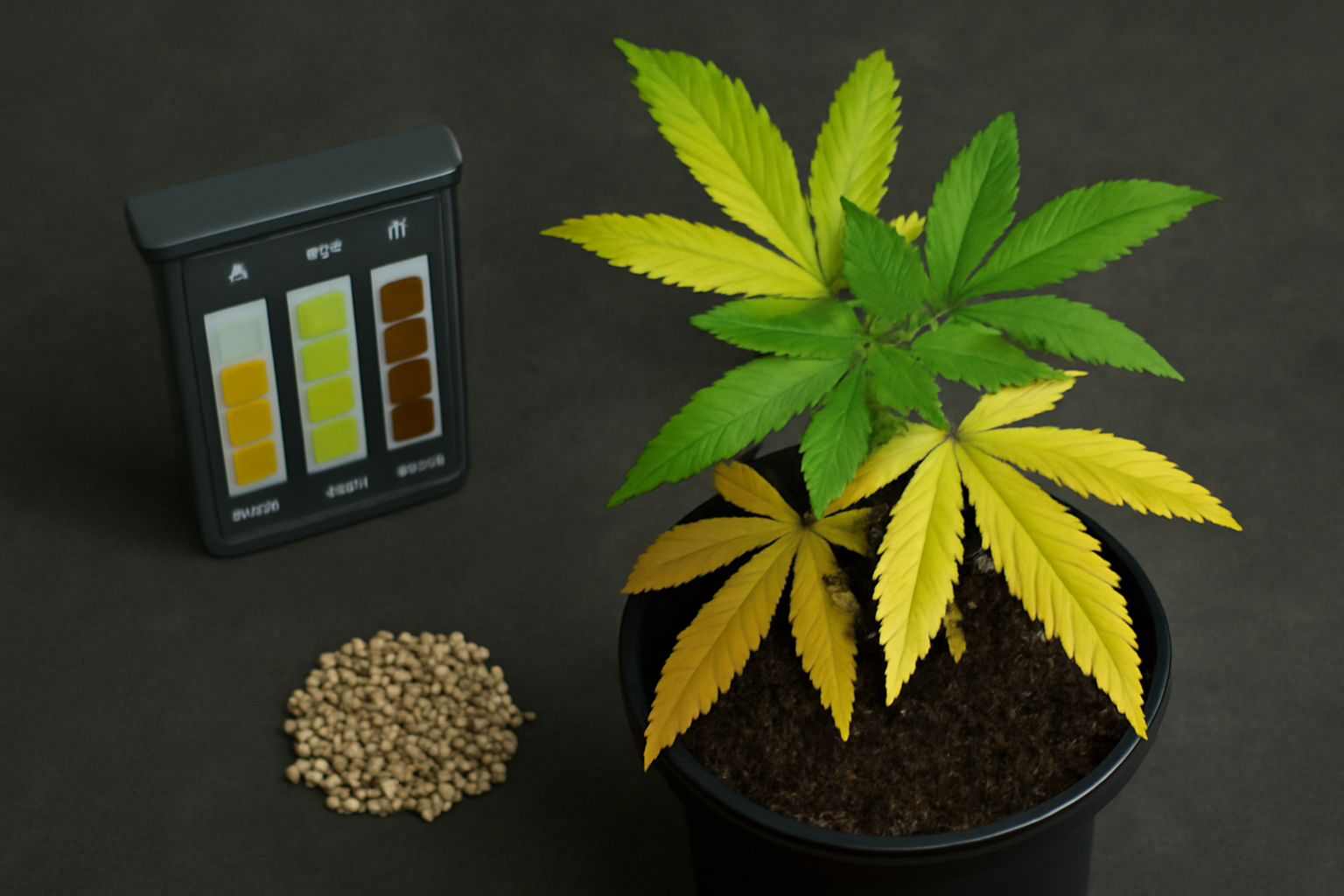
Nitrogen Deficiency in Cannabis: Symptoms and Solutions
Nitrogen Deficiency is probably the most recognized nutrient issue when it comes to cannabis growers. Understanding how to recognize and correct nitrogen deficiency is important in order to keep healthy plants and ensure maximum yields throughout the growing cycle.
Understanding Nitrogen
Nitrogen is essential in the building of plant proteins, chlorophyll, and amino acids. During vegetative growth, cannabis plants need huge amounts of nitrogen to produce sturdy stems, vibrant leaves, and healthy root systems. If cannabis plants do not have sufficient nitrogen, they are unable to carry out all metabolic functions properly.
Early Symptoms
The most common symptoms of Cannabis Nitrogen deficiency occur first on older, lower fan leaves. This is primarily due to the cannabis plant recycling nitrogen from older leaves to new growth, while the yellowing starts at the tip and edge of the leaf. The common progression of nitrogen deficiency symptoms is a bottom-up approach, starting with older leaves and eventually progressing upward.
Progression of Symptoms
As nitrogen deficiency progresses, leaves that were once yellow will turn brown and crispy. Yellowing will progress upward through the plant canopy, and in serious cases, the sugar leaves and even buds may yellow. Plants might also slow in size, have stunted growth, or display a lack of vigor in comparison with healthy, non-deficient specimens.
How it Differs from Other Issues
Nitrogen deficiency can be confused with the natural occurrence of senescence or even other nutrient deficiency issues. Unlike potassium deficiency, where leaves burn starting at the edges, nitrogen deficiency typically creates uniform leaf yellowing. pH imbalance can also create similar symptoms, which is all the more reason to do soil testing!
Immediately Fixing Nitrogen Deficiency
Once Cannabis Nitrogen deficiency has been recognized, the immediate fix is to add nitrogen fertilizers. Liquid nitrogen sources are the quickest means of correcting any deficiency – you should see improvements in your plants in 3-5 days. Organic products such as fish emulsion or compost tea are advantageous in correcting deficiencies in that they provide slower-release nutrition and lower potential for nutrient burn.
Preventing Nitrogen Deficiencies
Preventing nitrogen deficiency requires understanding the changing needs of your plants over their lifecycle. Plants in the vegetative stage will need high levels of nitrogen while plants in the flowering stage will require reduced levels of nitrogen to avoid delayed maturation, and therefore yield. Regularly testing soil and maintaining appropriate pH levels (6.0-7.0 soil and 5.5-6.5 hydroponic) will enable you to offer your plants optimal nutrient availability.
Organic versus Synthetic
Organic nitrogen sources such as compost, worm castings, and organic fertilizer will provide slow-release nutrients that are less likely to produce deficiencies or toxicities. Synthetic fertilizers will allow for greater precision in nutrient control and faster results but may present challenges in preventing overfeeding and nutrient lockout when managing ratio levels.
Monitoring your Plants
Being diligent in inspecting your plants regularly will aid in recognizing deficiency symptoms even before they alter plant growth. Monitoring ISP schedules, pH levels (and converting from ppm), adjusting ratios as appropriate according to the growth stage or if growth activity is otherwise escalating will avoid deficiencies while also preventing byproducts of the plant being overfed and burning from nutrient feeding issues.
This all boils down to effectively managing nitrogen levels and sufficient amounts of nutrition at appropriate times, so that plants receive the optimal nutrition throughout their entire developmental cycle.