
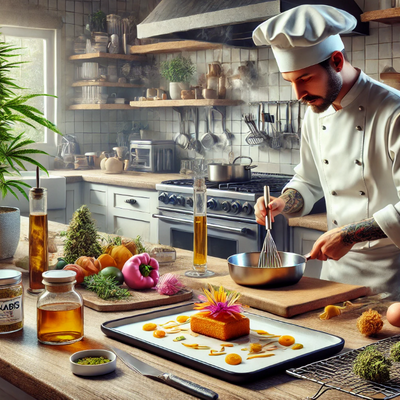

Gourmet Dishes You Didn't Know Could Be Infused with Cannabis
The culinary relationship with cannabis has experienced a metamorphosis from its pot brownie beginnings to a sophisticated pursuit we see today. Cannabis chefs infusing with a level of precision, creating beautiful dishes that highlight the complex flavor components rather.
The Science of Cannabis Culinary Arts
Cannabinoids bind readily to fats, meaning that a proper infusion in oils, butters or cream are at the crux of the exploratory journey. In addition, knowing when to control temperature as there is such a thing as too hot or not hot enough when infusing. Through years of practice and trial and error, master cannabis chefs have learned how to control the temperature variables so that their potency and the integrity of the flavor remain their priority.
New Life to Unsuspecting Appetizers
Appetizers we know and love have been re-invented through the careful incorporation of cannabis. A thoughtful approach when preparing amuse-bouches, cannabis infused olive oils with a mere drizzle on top of fresh burrata is a great way to begin the cannabis journey. You could also serve them blinis with crème fraîche that is ever so lightly infused with some cannabis, and that’s a fine way to begin a multi-course experience.
Reimagined Main Course Classics
Most interestingly, cannabis is being included successfully into main course dishes that have, until now, been regarded as sanctified. One such example is Beef Wellington. One of the hardest dishes to make even by accomplished chefs is incredibly enhanced with cannabis-infused duxelles; the earthy mushroom mixture yields more earthy flavors, supplely melding with the rich beefiness of the dish. Classic coq au vin can be improved when the wine reduction is cannabis-infused; the flavor of the dish remains solid versus being completely overrun by the plant’s herbaceous characteristics, but makes the dish more herbaceous overall.
The Seafood Challenge
Seafood is a challenging realm, but also one that is promising when it comes to cannabis infusion, because of its very delicate flavor profiles. Some excellent chefs have started to successfully incorporate cannabis terpenes with a citrus-forward bias into mignonette sauces to pair with oysters. Likewise, a lobster bisque can be elevated by a finish of cannabis-infused cream, where the herbaceous notes complement the inherent sweetness of the crustacean. In its totality, these examples show cannabis usage permeating all aspects of culinary work.
The Cross-Cultural Entity
Cannabis has proven itself to be versatile across the scope of various international cooking traditions. In India for example, traditional curry preparations are eager for cannabis-infused ghee; the myriad of flavors of the plant integrates nicely into existing spice profiles. Japanese cuisine demonstrates several different adaptations. In one particular use, chefs have unearthed ways to incorporate subtle cannabis tones into chawanmushi, or savory custard. In each case, cross-cultural examples underscore the plasticity that cannabis can provide in any kind of culinary landscape.
The Art of Pairing Beverages with Cannabis
A lovely fine dining experience can only be completed by the thoughtful pairing of beverage to food or its consumption physical format. A variety of non-alcoholic cannabis-infused beverages are being marketed to be served with the same thoughtfulness as traditional wine pairings. These beverages contain terpene profiles selected to competently complement each course, while also avoiding some of the compartmentalizing effects that alcohol can stave off.
We can only imagine most of these culinary wonders will become even more commonplace in the dining landscape, changing the definition of fine cuisine in the modern era.