

CBD and Sleep in Summer
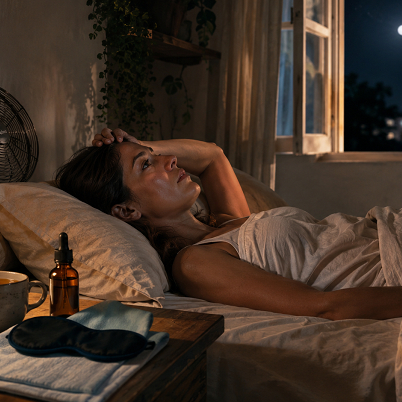
There’s a uniquely cruel aspect of British summers that receives little attention. While days during these months are simply wonderful (warm, long, etc.), nights are another story altogether. Nights are stuffy bedrooms; light does not fade until close to midnight; you wake up at 4 AM because dawn arrives so early; and there’s nothing quite like waking at 2AM when the duvet is flung off and a fan is blowing directly on your head. For an important number of people in the United Kingdom, summer is likely one of the most unpleasant times of the year for sleep.
Serious attention is being given to CBD as a sleep aid and the underlying mechanisms for this attention are indeed relevant to summer-specific sleep disruptions. The purpose of this article is to provide a description of why warm nights may be particularly detrimental to the quality of sleep, describe what CBD can and cannot do in relation to these warm nights, and discuss how to develop a realistic and effective sleep routine using CBD during hot summer months.
Why Summer Wrecks Sleep: The Physiology
Sleep has an extraordinary dependency on ambient temperatures. As you fall asleep, your body goes through a decrease in its internal or core temperature. It’s normal to have this temperature drop about 1-2 degrees Celsius. This temperature drop is what sends the signal to your brain to start entering into the first stage of non-REM or NREM sleep (slow wave sleep). Slow wave sleep is the most restorative phase of our sleep cycle.
In warm summer conditions, several things interfere with this process:
- Ambient heat prevents the bedroom environment from supporting the core temperature drop that initiates deep sleep
- Humidity impairs sweat evaporation, the body’s primary cooling mechanism, keeping skin temperature elevated
- Extended daylight suppresses melatonin production — the hormone that signals darkness and prepares the body for sleep — because light exposure, particularly morning light, shifts the circadian rhythm forward
- Early sunrise (around 4:30–5am in the UK at midsummer) triggers cortisol release earlier than the body’s natural waking time, producing lighter sleep and earlier unwanted waking
- Dehydration from warm days increases cortisol and disrupts the hormonal balance that supports deep sleep phases
As a result, the sleep experienced in the summer months is going to be lighter, shorter, more disrupted and not as restorative as sleep in the cooler winter months. However, individuals may not be aware why their summer months seem so much worse than their winter months.
What CBD Does in the Sleep Context
CBD’s role in relation to sleep is not a single mechanism however there are many mechanisms that overlap and work together (which is part of what makes the evidence so complex) and therefore it affects multiple factors of summer related sleep disruptions.
Core Mechanisms:
- Cortisol Reduction – Studies have shown that CBD reduces cortisol levels specifically the evening cortisol levels that disrupts your sleep onset. The timing of this mechanism is very important in the context of summer because the early-morning sunlight will typically cause a shift in the entire day-long cortisol rhythm.
- Anxiety & Rumination – Heat-related discomfort while trying to fall asleep often exacerbates by anxiety. The anxiolytic effects of CBD help to create a decreased arousal state in people experiencing anxiety/mental restlessness making it easier to fall asleep due to the warmth in their environment.
- REM Sleep Modulation – At moderate dose levels, studies suggest that CBD promotes slow wave sleep without disrupting REM architecture like many prescription sleep medicines and ethanol/alcohol.
- TRPV1 Interaction – CBD also interacts with TRPV1 receptors which are responsible for heat sensation/thermoregulation. Some research suggests this may be a factor in how CBD creates a perceived slight “cooling” effect on body temperature, although this is one of the least understood of all the above mechanisms.
What CBD does not do is to cool down your bedroom or to block out the early morning sunlight. Environmental reasons for disrupted sleep during the summer months need to be addressed through environmental methods such as using black-out curtains/window treatments, cooling aids, and proper air flow/ventilation etc… CBD is most effective when used in conjunction with environmental remedies vs. being used as a replacement for them.
CBD vs Other Common Summer Sleep Aids
Sleep aid | Mechanism | Summer relevance | Drawbacks |
CBD oil (sublingual) | Cortisol reduction, anxiolytic, REM support | High — addresses anxiety, cortisol dysregulation, sleep onset | Slower onset than some; dose-finding required |
Melatonin | Circadian signalling | High — compensates for light-suppressed melatonin | Available OTC in UK only at low doses (0.3mg); higher doses prescription |
Antihistamines (diphenhydramine) | Sedation via H1 blockade | Moderate — induces sleep but suppresses REM | Hangover effect, tolerance builds rapidly, dry mouth |
Alcohol | CNS depressant | Low — worsens sleep architecture despite inducing sleep onset | Fragments sleep, suppresses REM, increases night waking |
Magnesium glycinate | GABA modulation, muscle relaxation | Moderate — supports relaxation and reduces night cramps | Slower-acting, works better as a consistent supplement |
CBD + melatonin combined | Dual mechanism | High — complementary actions on different aspects of sleep | Requires correct timing and dosing |
Blackout blinds | Light elimination | Very high — addresses root cause of circadian disruption | Not portable; requires installation |
Practical Summer Sleep Protocol with CBD
When you know what you are going to do when you go to sleep, it helps a lot more than just doing something random. Here is the protocol I have developed specifically to help people fall asleep during long summer nights in the U.K.:
- Pre-Sleep (2-3 hours). Dim all your lights inside and turn off all bright screens (TVs etc.) because that will let your body produce its own melatonin which was stopped by all that daylight.
Start cooling down your bedroom. Open up your windows and doors to create a breeze from the other side of the house. Or put a fan on to circulate the air. - Before Bedtime (60-90 min). Take some CBD oil sublingually (underneath your tongue). For this type of product, 20-40 mg per night should be good for promoting sleep. Start with 20 mg and see how many nights it takes to get used to it.
I chose to give this time frame so the CBD can fully absorb into your system before you go to sleep. If you were to take CBD right before bedtime it would probably not reach its peak effect until after you’ve fallen asleep or had your sleep disrupted.
- Before Sleep (30min). If you want to use Melatonin, now is the time. Take .3-1 mg. This dose level is closer to the amount of melatonin we naturally produce physiologically. Most American products contain much larger doses.
- Cooling Down Your Body. The best way to cool down is taking a cool shower. The cool water makes your skin cooler. As well as lowering your body’s skin temperature, it also lowers your body’s internal temperature and starts to induce a deep sleep – one of the least recognized ways to improve sleep quality during hot summer nights.
- Your Sleeping Environment. Darkness is key. Use blackout curtains or a sleep mask to keep out 4 am sunlight. Keep the room cool. Ideally it should be no warmer than 65 degrees F. That will be hard to achieve during an extreme heatwave. But if possible, try and ventilate your home as much as you can.
Single Weedseeds blog for your health
There are scientifically supported physiological effects from summer sleep disruptions; there are unaddressed issues with these disruptions and this is where CBD has benefits for many of them (elevated evening cortisol levels, nighttime anxiety and disrupting normal sleep patterns) and an adequate scientific basis for using it. A consistent routine will get you better results using CBD than as a quick fix when needed. The environment can be modified to eliminate much of what CBD cannot. Most of the reasons for disrupted sleep during the summer months can be addressed by combining the use of low dose melatonin with low dose CBD oil administered 60-90 min prior to bed time and utilizing both environmental changes (blackout curtains/low room temperature) to create an optimal sleep environment.
This is not a substitute for experiencing a “perfect” October nights’ sleep. This will help your body recover over the course of a season.
This article is for informational purposes only and does not constitute medical advice. If you experience persistent sleep difficulties, consult a GP. Single Weedseeds blog recommends FSA-compliant CBD products from reputable UK retailers.