
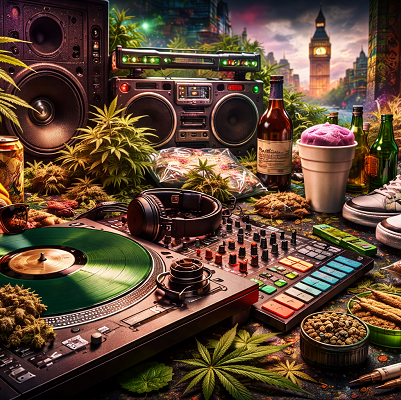

Cannabis, Culture and Creativity in UK Popular Music: From Reggae to Jungle and Grime
Cannabis has a rich history of association with popular music in the United Kingdom; from the reggae roots of Brixton to the underground jungle and grime scenes in London, it has shaped the sound and culture of various significant musical movements in Britain. Cannabis’ connection to music represents broader social and cultural trends in the United Kingdom, especially in urban multi-ethnic areas.
The influence of cannabis on British music has evolved since the post-war migration of Caribbean people to Britain brought their musical traditions and cultural practices with them. Reggae and dub were prominent forms of artistic expression that allowed individuals to express themselves culturally, resist oppressive societal structures and create a sense of community.
In South London, particularly in Brixton, reggae culture flourished and the community helped develop reggae as a significant underground force in British music. This culture was heavily associated with cannabis which was often used metaphorically to describe spiritual and liberating feelings, and resistance against oppression.
Many artists such as Bob Marley, Peter Tosh, and Lee “Scratch” Perry often referred to cannabis in their music, influencing musical style and youth culture in the United Kingdom.
As a more experimental offshoot of reggae, dub producers (King Tubby and Augustus Pablo) developed layered psychedelic soundscapes that many listeners associated with relaxation and reflection resulting from the use of cannabis. Dub’s heavy bass lines and echoing mixtures established a sonic landscape that defined the culture of the first British sound systems.
Jungle and the Rise of Rave Culture
The late 1980s saw a huge increase in the popularity of UK rave culture, leading to the emergence of jungle – a fast paced genre characterized by rapid break beats, strong emphasis on bass, and influences from reggae, dub and hip hop. Jungle rapidly became the soundtrack of underground clubs and warehouse parties.
Cannabis had a role in the social climate of jungle events, providing a sense of community and a relaxed atmosphere at parties and festivals. Rave culture placed an emphasis on freedom, community and shared experience, and therefore, cannabis was often used at parties and festivals as a means of enhancing the relaxed atmosphere.
Artists such as Goldie, Shy FX and Roni Size helped create jungle as one of the defining sounds of multicultural Britain. Jungle encapsulated the vibrancy of city living and drew significantly upon the Jamaican sound system tradition.
In the jungle subculture, cannabis represented unity and creative expression and was often passed around among friends during events. The sound system crews who organised large scale outdoor parties and festivals, influenced by Jamaican traditions, also often included cannabis as a cultural symbol of peace and unity.
Grime and the Streets of London
By the early 2000s, another important genre had emerged from London’s urban communities – grime. Combining elements of garage, jungle and hip hop, grime became the voice of a new generation of young artists.
Artists such as Dizzee Rascal, Wiley, and Skepta created grime as a powerful cultural movement that reflected everyday lives in the working class neighborhoods of London. Although less common than in reggae, references to cannabis are still present in the lyrics and imagery of grime.
For many artists, cannabis is related to creativity and social life. References to cannabis are often casual and reflect everyday experiences rather than being central themes in their music. Sessions at the recording studio, songwriting sessions, and relaxed time before performances may involve cannabis as a way to enhance the creative process.
Grime also represents the larger underground culture of London. In areas such as East London, music, identity and community are all interlinked. Therefore, cannabis is embedded in the cultural narrative of youth culture and city living.
Legacy of Cannabis and UK Music
From reggae and dub to jungle and grime, cannabis has inspired generations of British musicians. It has been associated with creativity, community, and counterculture. Despite the fact that cannabis is still banned in the UK, there is no doubt about its existence within the UK music scene.
From the reggae clubs of Brixton to the grime studios of East London, cannabis has been an integral part of the cultural story behind the soundtrack of modern Britain.